
Breakthroughs in Environmental Protection and Curved Surface Adaptation: 2026 Water Transfer Screen Printing Ink Technology Innovation Takes Root
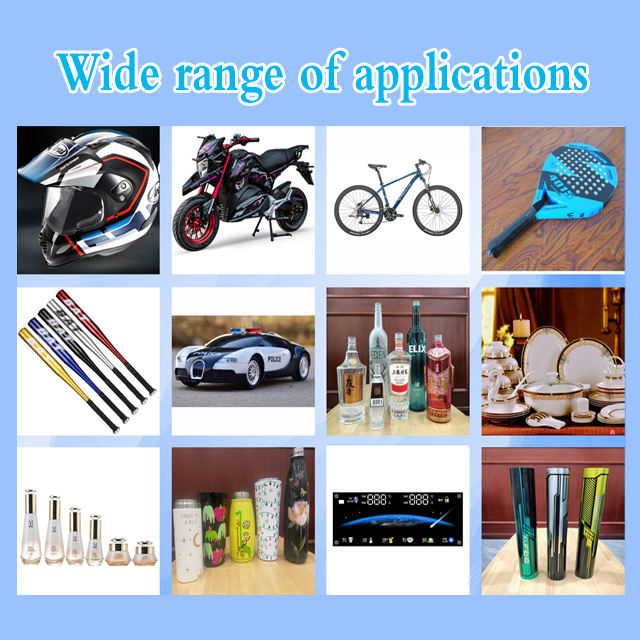
Currently, water transfer screen printing inks are accelerating their upgrades in three major directions: environmental friendliness, high efficiency, and multi-substrate compatibility, becoming a core material for customized surface decoration in fields such as automotive interiors, consumer electronics, sporting goods, and home décor. By 2026, mainstream products had formed two major technology systems: First, UV-LED curable inks, relying on LED ultraviolet light for rapid curing, shorten drying time by 60% compared to traditional solvent-based inks, increasing single-line efficiency by over 3 times, achieving a coating hardness of up to 4H after curing, improving scratch resistance by 60%, and with VOC emissions of only 3.2 kg per ton, far below the national standard of 50 g/m². Suitable for various materials such as glass, metal, ABS, PVC, and PC, it is widely used in helmets, thermos cups, bicycle frames, and automotive interior parts. Second, environmentally friendly water-based inks, through nano-level pigment dispersion and star-shaped resin emulsification technology, achieve benzene-free, low-odor, and low-heavy-metal residue. Certified by multiple standards including EU EN71-3, RoHS, REACH, and ISO9001:2015, it achieves Grade 0 adhesion on low surface energy substrates such as PP and TPE through molecular brush biomimetic adhesion technology, with no peeling after 500 cycles of thermal shock. It is also compatible with digital printing production lines, achieving batch color difference control accuracy of ΔE≤0.8.
The product also features an optimized formula to address the pain points of transferring inks onto complex curved surfaces, boasting high stretchability (stretch rate increased to over 30%), excellent leveling properties, and high gloss. Some products can skip the base coat step and be printed directly, achieving a transfer success rate exceeding 99.2%. This solves the compatibility issues of traditional inks in irregularly shaped parts and small-batch customization scenarios. Industry data from 2026 shows that environmentally friendly water transfer screen printing inks accounted for over 65% of the market, with a domestic production rate expected to reach 85%. The price range for mainstream products remained stable at 35-55 RMB/kg, while high-end functional products (such as weather-resistant, high-temperature resistant, and biodegradable types) maintained at 65-90 RMB/kg. Exports continued to grow, mainly flowing to Southeast Asia, the Middle East, and Latin America.
Industry Trends and Application Value
With the in-depth implementation of the "14th Five-Year Plan for Industrial Green Development" and new VOCs emission regulations, the green transformation of water transfer screen printing inks has become inevitable. Leading companies' R&D investment accounts for over 43% of the industry's total expenditure, focusing on breakthroughs in low-VOC weather-resistant formulas, multi-substrate universal systems, and digital printing compatibility. On the application side, lightweight automotive component decoration, smart terminal appearance customization, and surface treatment of new energy home appliances have become core growth scenarios. Technological upgrades have also driven the industry's average transfer printing yield to increase from 65% to 92%, and reduced overall costs by 22%, providing efficient and compliant solutions for personalized customization in the manufacturing industry.