
In the dynamic world of industrial decoration, glass printing stands at a fascinating crossroads of artistry and engineering. As we step further into 2026, the demand for high-performance decorated glass—from sleek architectural facades to durable automotive displays and elegant beverage bottles—continues to surge. According to industry forecasts, the global glass printing ink market is projected to see significant growth in the coming years, driven by trends in customization and sustainable manufacturing .
At Lauer Water-Based New Materials (Foshan) Co., Ltd. , we don‘t just follow these trends; we set the standard. Our commitment to research and development has led to a comprehensive portfolio designed to meet the intricate needs of modern glass printers. Central to our offering is our expertise in two critical categories: Uv Screen Printing Ink On Glass and high-performance Solvent Based Glass Ink. When combined with the precision of a modern Glass Printing Machine, our inks transform ordinary glass into extraordinary products.
The UV Advantage: Speed and Sustainability
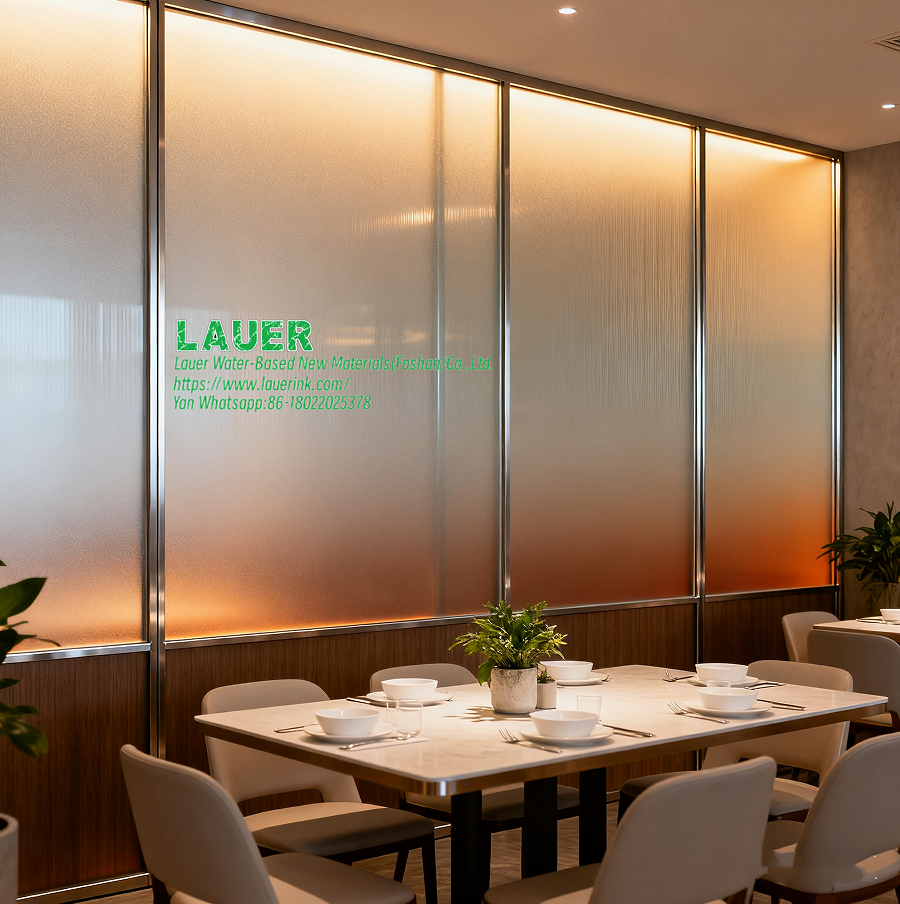
When production efficiency is paramount, Uv Screen Printing Ink On Glass offers an unrivaled solution. Traditional inks can require lengthy drying times or high temperatures, creating bottlenecks. Our latest generation of UV curable ink , however, harnesses advanced photo-initiators to cure instantly under powerful LED-UV lamps.
Recent tests in our application lab demonstrate that our UV glass ink series achieves full hardness and adhesion immediately after passing through the curing unit at speeds of up to 15-20 meters per minute. This not only slashes energy costs but also reduces the physical footprint of the production line by eliminating long convection ovens . Furthermore, we have tackled the historical weakness of UV chemistry: water resistance. Our new UV formulation withstands over 30 days of water immersion and 24 hours of boiling water testing without losing adhesion—a critical breakthrough for bathroom and kitchen glassware applications .
The Precision of Solvent Based Systems
While UV technology excels in speed, Solvent Based Glass Ink remains the gold standard for applications requiring extreme chemical resistance and versatility in post-processing. Our solvent-based ranges are specifically formulated for compatibility with automated Glass Printing Machines, ensuring consistent flow and color density across thousands of sheets.
A key differentiator of our solvent-based inks is their low-temperature curing capability. Conventional glass inks often require sintering at high temperatures (around 600°C-800°C) or baking at 150°C-180°C. However, our advanced Solvent Based Glass Ink can achieve complete cross-linking at just 120°C, opening up possibilities for printing on temperature-sensitive coated glasses and electronics . With a pencil hardness reaching 4H and exceptional resistance to solvents like MEK (over 200 double rubs), these inks provide durability that stands the test of time .
Synergy with Modern Glass Printing Machine
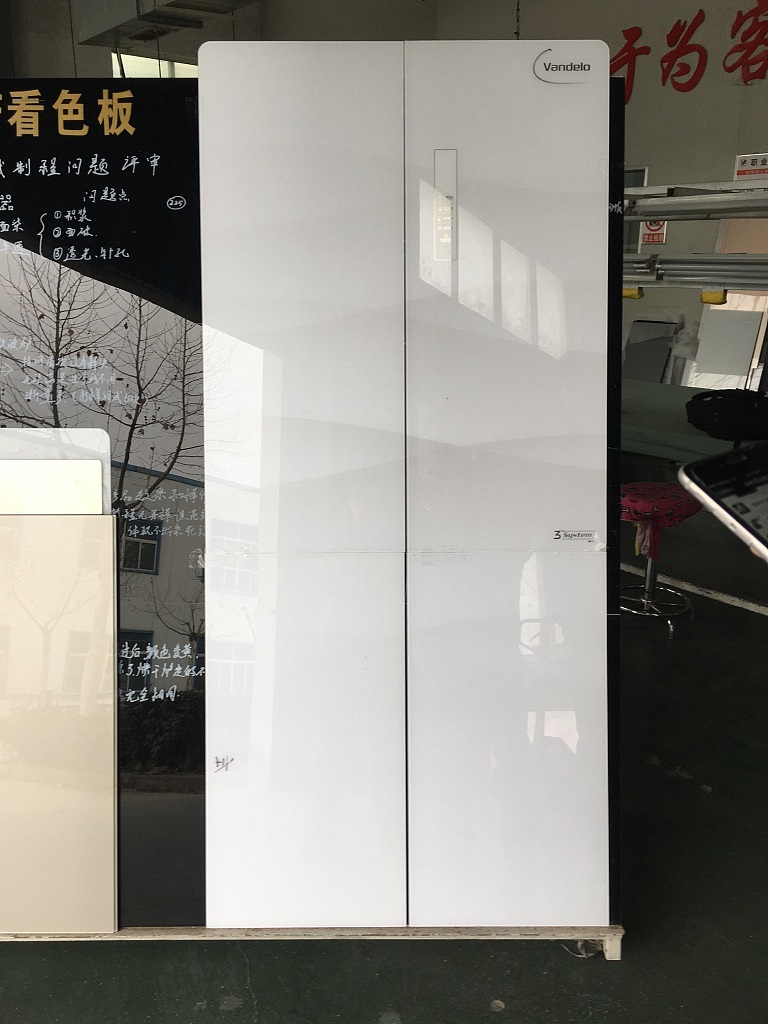
Of course, even the best ink is only as good as the machine that lays it down. The market has seen remarkable advancements in Glass Printing Machine technology, particularly in precision and automation. Today‘s high-end flatbed screen printers feature fully automatic registration systems and adaptive pressure controls.
Our technical team works closely with manufacturers to ensure our inks perform flawlessly on these advanced platforms. For instance, modern Glass Printing Machine now offer CCD cameras that achieve registration accuracy of ±0.015mm, crucial for printing intricate ITO patterns or BM (Black Matrix) layers on display glass . Our inks are rheologically engineered to respond perfectly to the servo-driven squeegee mechanisms found on these machines, ensuring that whether you are printing a solid white flood coat or fine text, the result is flawless.
Data-Driven Formulations for Tomorrow‘s Challenges
The era of “one-size-fits-all” is over. Today, we utilize data analytics to track performance metrics like pigment dispersion stability and solvent release rates. This data allows us to customize solutions. For example, when printing on glass intended for automotive interiors, our inks must withstand extreme temperature cycles (-38°C to +100°C) without micro-cracking . By analyzing the coefficient of thermal expansion (CTE) of both the glass substrate and the ink film, we formulate products that move in unison with the glass, preventing failures.
Looking Ahead: The Future is Printed
As we look toward the next decade, the lines between form and function will continue to blur. Smart windows, interactive touch surfaces, and sustainable packaging are driving the need for inks that are not only colorful but conductive, haptic, and eco-friendly.
At Lauer Water-Based New Materials (Foshan) Co., Ltd. , we are excited to be at the forefront of this evolution. Whether you are running high-volume architectural glass through a massive Glass Printing Machine or detailing intricate designs with specialized Uv Screen Printing Ink On Glass, we have the chemistry to bring your vision to life. And for those applications demanding the ultimate in chemical armor, our Solvent Based Glass Ink remains the trusted workhorse.
Contact us today to request a sample kit and discover the Lauer Water-Based New Materials (Foshan) Co., Ltd. difference. WhatsApp :86-18022025378 Yan